

Invisible Day: Your Permission Slip Out of the Funk
Feeling in a funk?
Yeah… I’ve been there too, the foggy, heavy, “ugh” kind of day where your brain feels like a tangled necklace you don’t have the energy to unravel.
So here’s my answer:
Invisible Day.
(Full disclosure I have borrowed this idea from a comment on an Instagram comment and I want to share because it is a game-changer.)

Remember when you used to block out the world?
Stay with me.
What would you actually do if no one was watching?
And I mean actually watching, not the version of “watching” where we imagine every stranger has a running commentary about our outfit or our life choices. I mean the real version:
*Side note: No one is watching because everyone else is too wrapped up in their own ego spirals to notice you.
Now humor me.
Imagine you left your ego behind for a moment… like a coat you shrug off before stepping outside.
Just for today, you’re invisible.
You don’t have to perform.
You don’t have to impress.
You don’t have to be “on.”
You don’t even have to be yourself if you don’t want to.
Oooph the power of that!
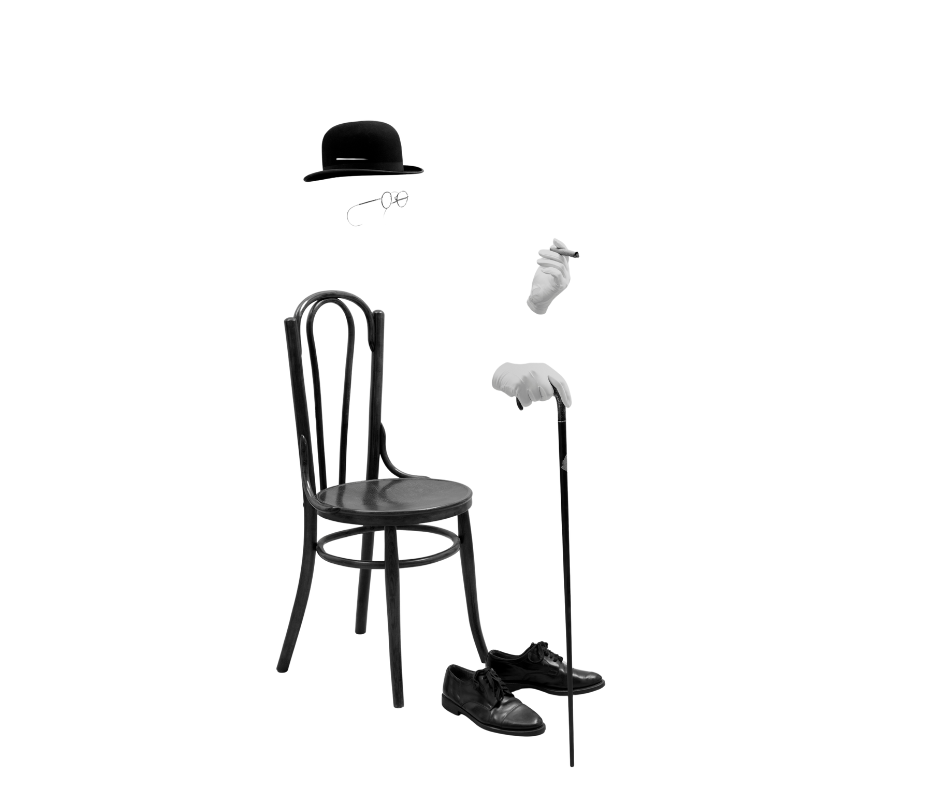
You get to just… exist.
Observe.
Float through the world without the weight of expectation pressing on your chest.
Let that sink in for a second. How would that feel?
If you were invisible today, what would you do?
Would you wander a bookstore without feeling like you should be somewhere else?
Would you order the pastry you always avoid because “you don’t need it”?
Would you take yourself to a movie at 11 a.m. with zero guilt?
Would you go for a long walk, or sit in a café and people-watch, or try on a ridiculous hat just because it made you laugh?

What would you do on you day?
Here’s where the magic comes in…
The power of your imagination, YES your imagination, that thing you used as a child because you didn’t have fully formed rules about the world. The thing you’ve been made to feel is “childish” or “dramatic”, is actually one of the most potent tools you’ll ever have.
Your brain, that fabulous, high-end supercomputer you’re walking around with.. It doesn’t know the difference between what’s happening and what you vividly imagine happening.
It responds the same way.
Same neural pathways.
Same emotional responses.
Same physiological shifts.
Which means:
You can create relief, joy, safety, and freedom… without anything external changing.
Wild, right?
It sounds too easy I know.
Me telling you to put on your invisibility cloak.
But easy doesn’t mean ineffective.
Sometimes the simplest things slip right under our resistance.
So humor me.
Let yourself embody invisibility… even for a little while.
If a whole day feels like too much?
Try it for a single moment:
An invisible coffee date with yourself.
An invisible movie trip where nobody expects anything of you.
An invisible walk where you’re not performing “being normal.”
Let the world blur out a little.
Let your nervous system unclench.
Let yourself exist without needing to justify any part of it.
Let me share the real secret:
When you imagine yourself invisible, you stop contorting yourself for imaginary audiences, and your whole body exhales.
That’s the magic.
That’s the reset.
That’s the shift out of the funk and back into yourself.
Try it. (I dare you.)
Let your mind wander where your body hasn’t gone yet.
You might be amazed by the pressure it lifts.
**Notes + Peer-Reviewed Research Behind the Magic
Your brain doesn’t differentiate between real and imagined experiences.
Mental imagery activates similar neural circuits as real-life action.
Kosslyn et al., 2001; “Neural foundations of imagery.” Nature Reviews Neuroscience.
Visualization reduces anxiety and calms the nervous system.
Guided imagery has been shown to lower cortisol and increase parasympathetic activity.
Jallo et al., 2010; “Guided imagery for stress and anxiety.” Journal of Holistic Nursing.
Self-distancing (imagining yourself as an observer) improves emotional regulation.
Viewing yourself from an outside perspective reduces stress and reactivity.
Kross & Ayduk, 2017; “Self-distancing in emotional processing.” Current Opinion in Psychology.
Imagination + embodiment reduce the ego’s “spotlight effect.”
People chronically overestimate how much others notice them.
Gilovich et al., 2000; “The spotlight effect.” Journal of Personality and Social Psychology.
Play boosts mood, motivation, and cognitive flexibility.
Even small forms of play improve emotional well-being.
Proyer, 2017; “The psychology of playfulness.” International Journal of Play.
