

The Forgotten Spell of Play (And Why Adults Need It More Than Ever)
Somewhere along the line, we were told to grow up.
We were told that play was for children. That imagination belonged in childhood. That curiosity was something you should “grow out of” as you entered the serious world of work, bills, responsibilities, titles, and efficiency.
And yet every piece of research on play—from the psychology labs to creativity theory—says the opposite.
Play is not a luxury. It’s not a childish detour.
Play is a biological design. A creative fuel source. A nervous system reset. A cognitive training ground. A form of learning, healing, and belonging.
The truth is this:
Adults don’t stop needing play. We just stop giving ourselves permission.
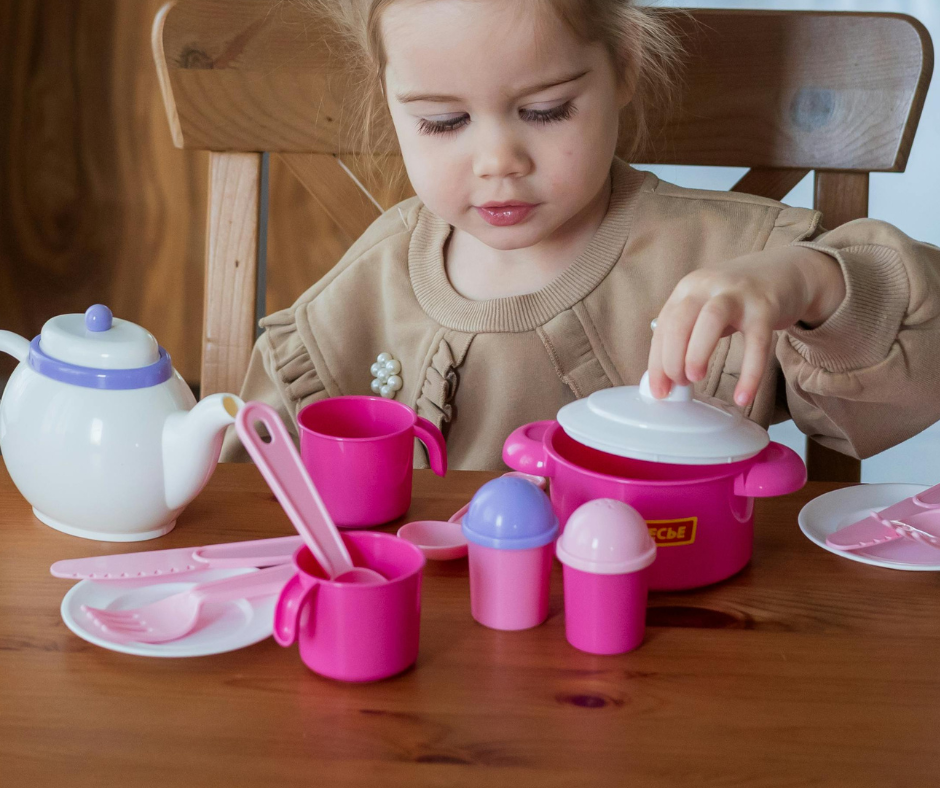
Why Do We Lose Play?
As children, play is how we explore the world. It’s how we test boundaries, express imagination, practice problem solving, and regulate emotion.
But adulthood rewards caution, control, and productivity. We become so focused on moving forward that we forget how to look sideways—or inward.
Researchers like Dr. Stuart Brown and Dr. Sandra Russ describe play as a core human instinct.
Their studies show that play isn’t an extra, it’s one of the driving forces behind:
creative thinking
emotional regulation
problem-solving
resilience
social connection
Children don’t play because they have spare time.
They play because it is how the brain grows.
Adults are no different.
The Science of Playfulness
Modern neuroscience is catching up with something ancient cultures already knew:
When you play, your brain transforms.
During play:
the prefrontal cortex relaxes (letting new ideas enter)
stress hormones reduce
creativity networks in the brain light up
your nervous system returns to safety
Psychologists call this divergent thinking, the ability to see possibility instead of limitation.
Play opens the parts of your brain responsible for imagination, innovation, and emotional flexibility. It improves wellbeing, mental health, and even physical energy.
It’s not fantasy. It’s biology.
Play Isn’t Always Laughter
One of the biggest misconceptions about play is that it needs to look like a playground. But research on adult play shows that it looks like something else entirely:
trying a new hobby
following a spark of curiosity
daydreaming
experimenting without a plan
creative problem-solving
dressing up or decorating
storytelling
building something for the joy of it
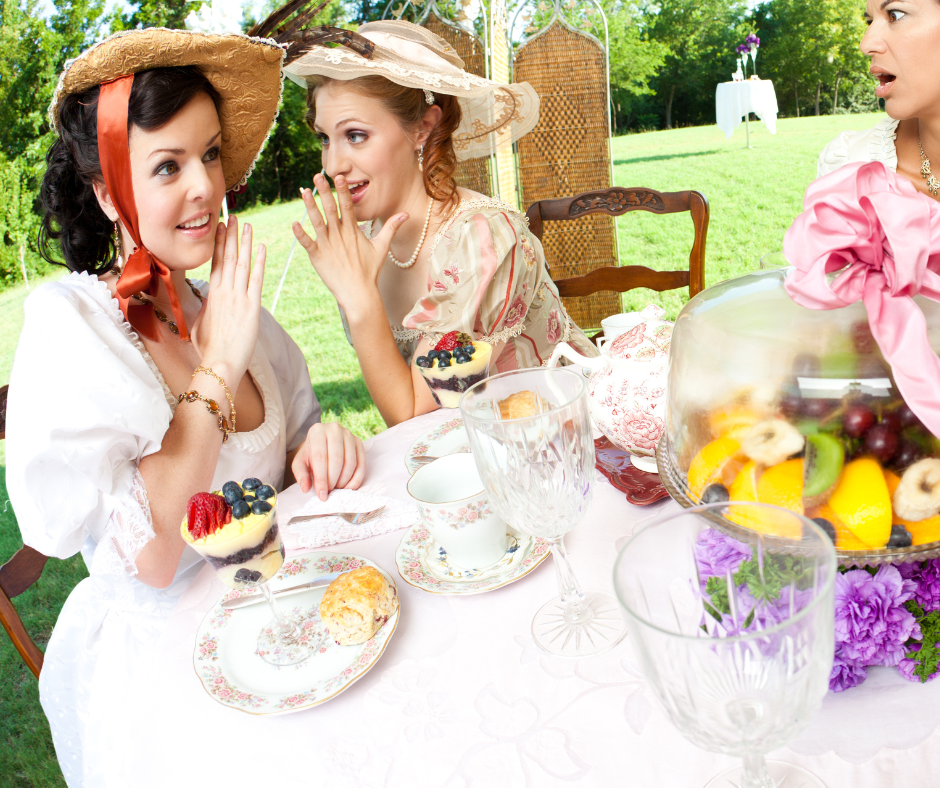
Play isn’t a task.
It’s a state of mind, and adults need it just as much as children.
We Lose Play When We Lose Wonder
In one of my favourite recent articles, psychologists describe imagination as a forgotten form of intelligence.
When we stop being curious, something inside us dulls. Play reawakens that part of us, the part that still believes in possibilities.
Because the truth is:
play makes us braver
play makes us more creative
play reconnects us with joy and identity
It reminds us that life is not just a series of outcomes—it is an experience.
Play Is Not Childish. It’s Sacred.
Play is not the opposite of serious work.
Play is what allows us to approach serious work with more innovation, ease, and perspective.
And I want to say this clearly:
The child in you didn’t disappear.
You just stopped giving them room to breathe.
They are still there, asking to explore, to try, to create, and to imagine—not because you’re failing at adulthood, but because you’re wired for more than mere survival.
So How Do We Begin Again?
Researchers studying adult playfulness say that the first step is incredibly simple:
Notice what sparks curiosity.
Follow curiosity without asking whether it’s useful, productive, or impressive.
Whether it looks like colouring or painting again, trying a new craft, dancing while you clean, reading something whimsical, building something with your hands, or simply moving slowly enough to notice the world.
Most importantly, stop waiting to feel ready, because creativity and confidence don’t show up before you start; they arrive because you began.
Why Wonder & Woo Is Built on Play
Everything we teach inside Wonder & Woo and Magic School is rooted in one truth:
Your imagination is one of your greatest tools.
Play changes your brain.
Ritual changes your chemistry.
Curiosity changes your life.
This is the piece most adults forget:
You don’t have to earn joy. You only have to remember it.
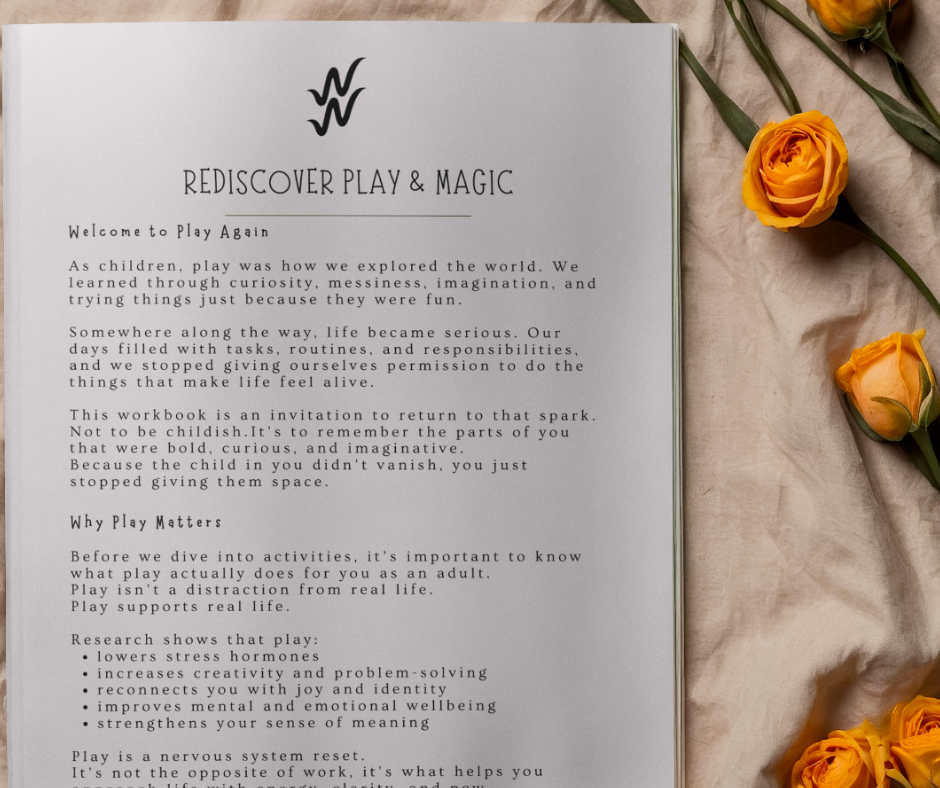
Want to Rediscover the part of you that still believes in wonder?
Take a look at our workbook and learn how to use play as a powerful tool for wellbeing, joy, and self-connection.
Rediscover Play & Magic
References & Further Reading
Brown, S. (2009). Play: How It Shapes the Brain, Opens the Imagination, and Invigorates the Soul. Avery Publishing.
Brooks, K. (2024). “Rediscovering Wonder: How to Spark Adult Imagination.” Psychology Today.
https://www.psychologytoday.com/au/blog/the-stories-we-tell/202408/rediscovering-wonder-how-to-spark-adult-imagination
Lina Salazar (2023). “The Science of Creativity and the Silent War Between Self-Expression and Self-Doubt.”
https://medium.com/@linasalazarsb/the-science-of-creativity-and-the-silent-war-between-self-expression-and-self-doubt-fa23d21b0b19
Russ, S. (2020). “Playing with Creativity Across the Lifespan: A Conversation with Dr. Sandra Russ.” National Library of Medicine.
https://pmc.ncbi.nlm.nih.gov/articles/PMC7250660/
The Genius of Play (2024). “10 Ways Adults Can Be More Playful.”
https://thegeniusofplay.org/tgop/genius/expert-advice/articles/10-ways-adults-can-be-more-playful.aspx
Proyer, R. T. (2023). “Adult Play and Playfulness: A Qualitative Exploration of its Meanings and Importance.” ResearchGate.
https://www.researchgate.net/publication/375994100_Adult_Play_and_Playfulness_A_Qualitative_Exploration_of_its_Meanings_and_Importance
Singer, D. & Singer, J. (2006). “Imagination and Play in the Adult Brain.” ScienceDirect.
https://www.sciencedirect.com/science/article/abs/pii/S0191308506270035
Stewart, R. (2024). Playful: How Play Inspires Creativity, Connection, and Wellbeing. Penguin Random House.
https://www.amazon.com/Playful-Thinking-Inspires-Connection-Creativity/dp/0593713400
